
November 2026 – Seasonal notes from our family garden in Los Osos, California
November usually bring a welcome change of pace to the garden. The long days of summer have passed, the last warm-season crops are finishing, and our attention turns toward the vegetables and flowers that thrive or at least hold in cooler weather, along with building new garden beds in preparation for spring.
Record scratch…
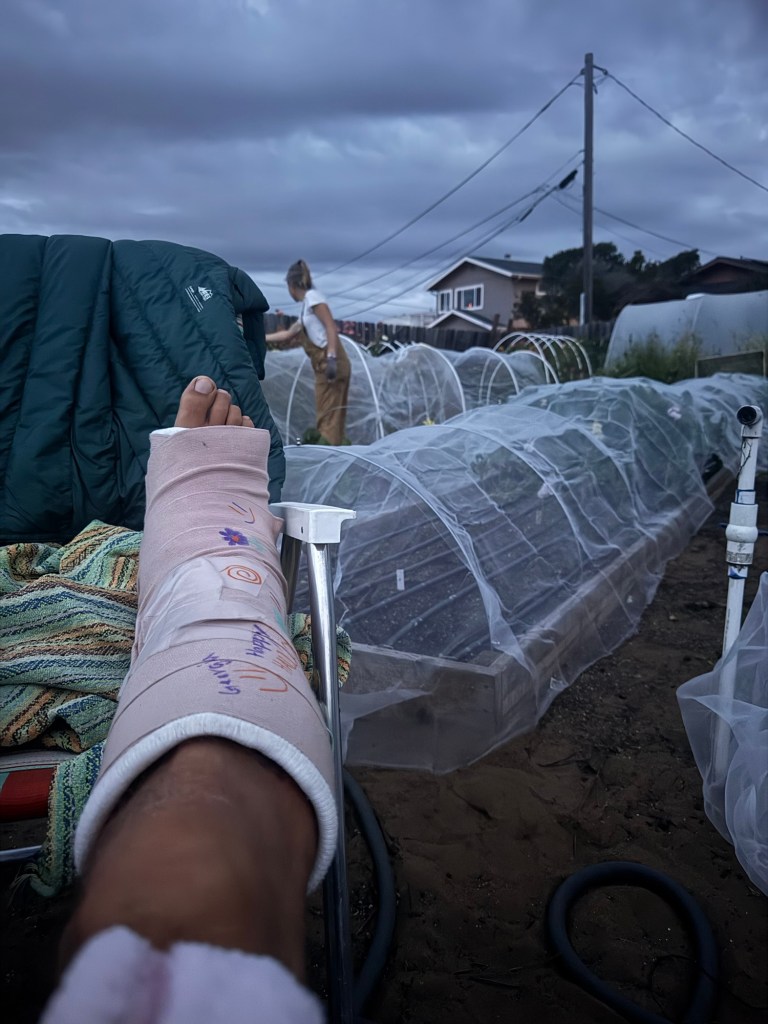
And then I (John) break my ankle!
The best-laid plans…
So here in our garden, we’re adapting. Some projects will have to wait, others will move forward a little more slowly, and we’re learning to be content with what we can manage for now. Gardens, after all, have a way of reminding us that we’re not always in control. I can’t dig in the garden right now, but I can type, so why not put that to good use and share a little of what we’ve learned with those who enjoy our produce?
Fortunately, here on the Central Coast, we enjoy a remarkably long growing season. While gardeners elsewhere are putting their gardens to bed, we’re planting ranunculus, anemone, spinach, lettuce, carrots, arugula, radish and other cool-weather favorites.
There’s something especially satisfying about a winter vegetable garden (less bugs). Growth is slower, the work is quieter, and the harvests are every bit as rewarding. And this year, at this time, a slower pace is exactly what our garden needs.
The Persephone Period
As we head into November, we’re entering what’s known as the Persephone Period, the time of year when daylight drops below ten hours per day. During this period, most vegetables grow very slowly, even in our mild coastal climate. The trick to a productive winter garden is to get your crops established before the shortest days arrive (think early-mid October plantings). Once established, hardy greens like spinach, kale, and lettuce can hold beautifully in the garden, providing fresh harvests throughout winter. Here in Los Osos, our Persephone Period lasts roughly from late November through late January, when the returning daylight begins to encourage new growth.
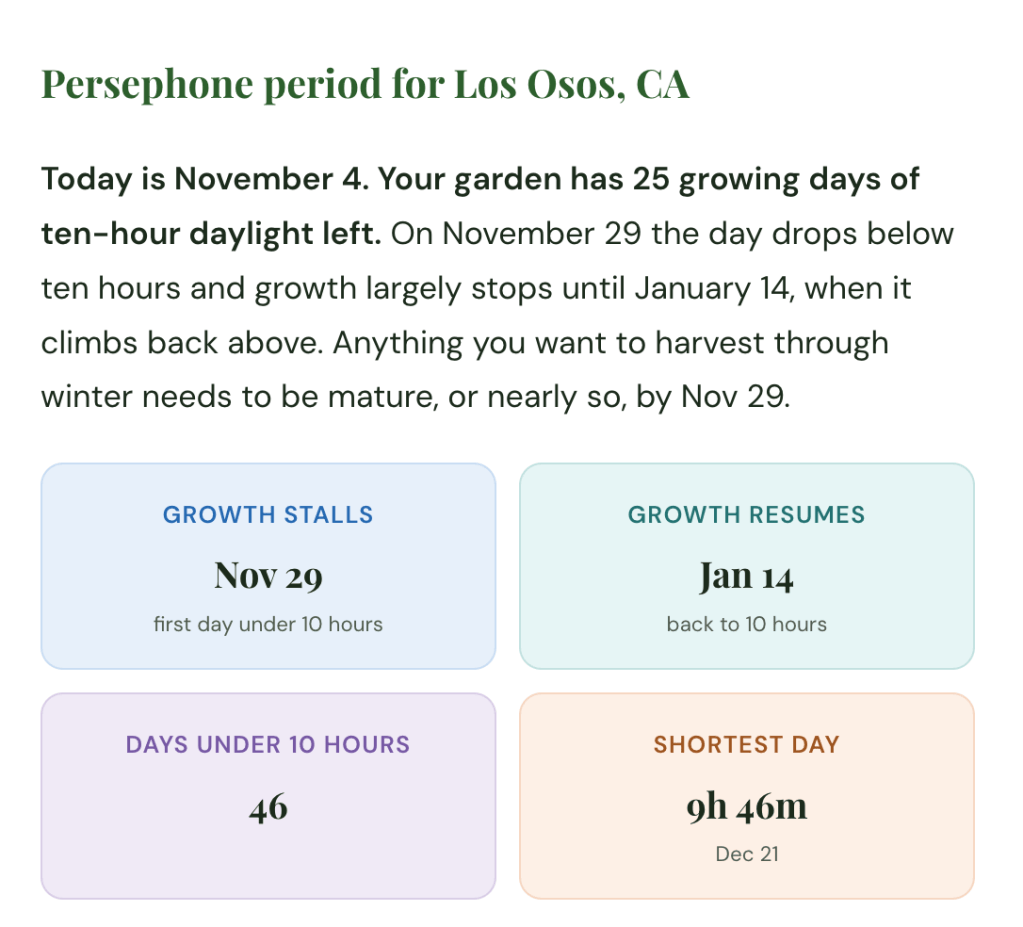
For those of you who also garden, here are a few suggestions from us!
November Planting Calendar
Direct sow in the garden
- radishes, green onions and mustard greens
- Spinach, arugula, and cilantro
- Garlic cloves for next year’s harvest
- Sweet Pea seeds – to get a jump on next year’s spring sweet pea flowers
Start in seed trays or transplant
- Lettuce and kale
- Broccoli, cabbage, and cauliflower
- Stock and other cool-season flowers
- Flats of bulb onions for January transplanting
Garden chores
- Remove spent summer crops
- Add finished compost to empty beds before the rains
- Plant cover crops to make use of the free water that’s coming
- Check irrigation timers as winter rains arrive and enjoy reducing it (or turning it off) for a few months
- Clean and organize seed trays and garden tools
Growing in Our Garden
Our summer vegetables are giving way to the crops that carry us through winter.
Spinach is one of our favorite winter vegetables. It thrives in the cool weather and produces wonderfully tender leaves.
Our Mokum carrots and Boro beets are dependable garden staples, and we are making sure the final successions of planting make it across the finish line into December so they can hold in the soil until they are needed to harvest
We’re also growing Dazzling Blue kale, Red Russian kale, arugula, cilantro, and several varieties of lettuce, including tender french butterheads and a few crisp romaines.
On the flower side, the dahlias are winding down while our attention turns to stock, ranunculus, and anemones for the coming season.
Georgia has taken on a project of dahlia hybridizing. She’s currently crossing Jolene with Foxy Lady. We are all excited to see what those seeds produce. Stay tuned for that!
Three Gardening Tips for November
1. Plant More Than You Think You’ll Need.
As we approach the shortest days of the year, vegetable growth slows considerably. If in doubt, plant more than you think you’ll need. A generous planting of lettuce, spinach, or arugula will help make up for slower winter growth and it holds in the ground with less pest pressure. Covering your beds with lightweight floating row cover can also make a noticeable difference (see photo at the top of this page), creating a slightly warmer, more protected environment that encourages faster growth and produces more tender leaves. It’s one of our favorite tricks for winter gardening here in Los Osos. And if the rains come pounding down, it helps with rainfall damage too.
2. Take advantage of the fall soil.
Our soil often retains some warmth well into November, even as the air cools. This creates a favorable environment for seed sowing. Seeds germinate best when the soil is kept consistently moist, so keep a close eye on newly planted beds. Drip irrigation is a must in our garden. Ours runs for seven minutes, four times a day (unless it’s raining, and yikes water bill).
Most direct-sown crops benefit from a little protection until the seeds emerge. You can simply cover your sowings with floating row cover, a piece of cardboard, or even upside-down pint glasses, depending on how much you’ve planted. These simple covers help retain moisture and protect emerging seedlings while they get established.
In our garden, we use glass cloches that I make myself, pieces of plywood (especially for carrots), or floating mesh row cover. Just remember to remove solid covers as soon as the seedlings emerge so they can get the light they need. A little extra attention during germination can make all the difference.
3. Prepare for slugs and snails.
Although the cooler weather is sending many of our garden insect pests into hiding, the return of damp conditions means slugs and snails are becoming increasingly active. Check beneath boards, pots, and dense foliage, especially around young lettuce and spinach. Removing hiding places and checking plants after dark can make a remarkable difference. If things get out of hand, Sluggo Plus is an organic gardening option for controlling slugs, snails, pill bugs, and earwigs. If it comes to that. Ha!
In Closing
So far it’s been an epic Fall. Our weather has been all over the place these past few weeks. Rain, heat, fog, wind, sunshine… we’ve had a little bit of everything.
As the winter rains approach, we hope your roofs don’t leak, your yards don’t flood, and your rain jackets have at least one more wet winter left in them.
Have a wonderful November, and I look forward to writing again in December.
Finally, thank you all for your support over these first 16 months of our little farmstand. The kindness, encouragement, and enthusiasm you’ve shown our family have been far more than we ever could have imagined. We’re truly grateful.
Happy gardening!
-John & family
November 4th, 2026

Leave a Reply